
Exterior basement waterproofing in Cincinnati, Ohio and Northern Kentucky
The most complete solution for basement moisture problems in Greater Cincinnati and Northern Kentucky. We stop water at the source, before it reaches your foundation wall. Every system is backed by a lifetime transferable warranty, and the inspection is free.
Call (513) 489-0332 in Ohio or (859) 356-1002 in Northern Kentucky, or schedule online:
Schedule your free owner inspection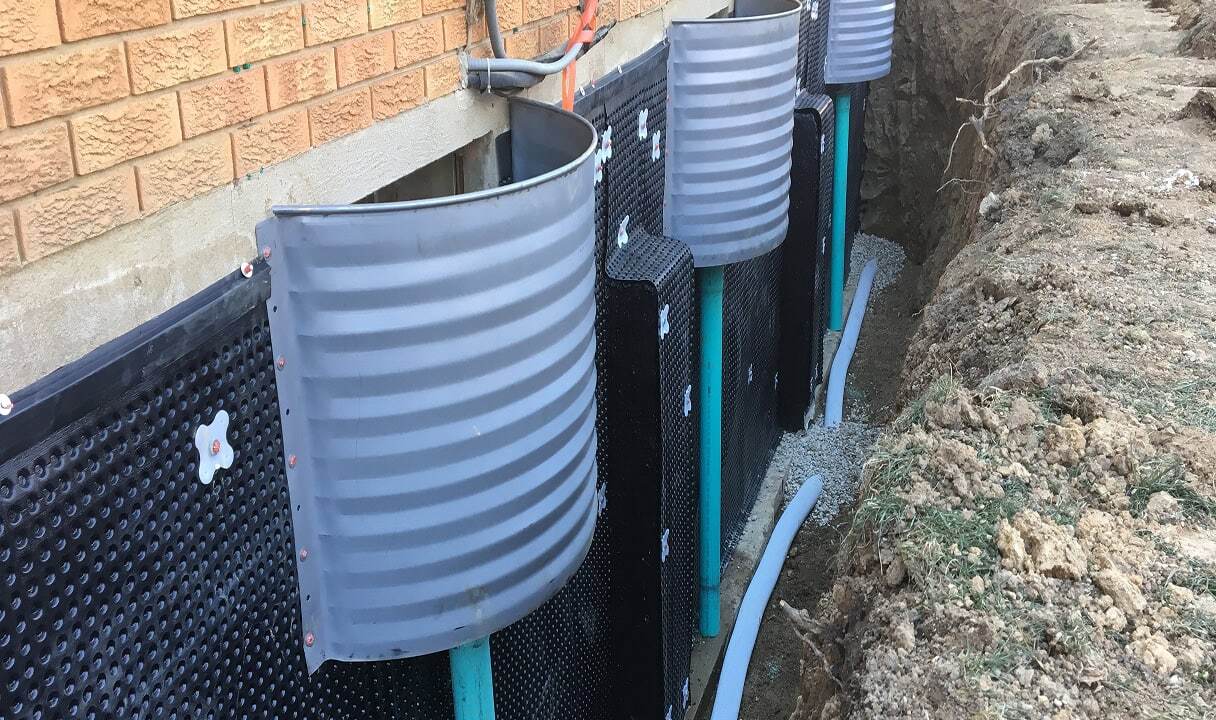
- Stops water at the source
- Lifetime transferable warranty
- Free owner inspection, no obligation
What is exterior basement waterproofing?
Stop water at the source, before it reaches your basement
Exterior basement waterproofing is a multi-layer system installed on the outside of a home's foundation wall to stop groundwater and soil moisture from entering the basement. Unlike interior waterproofing, which captures and redirects water that has already breached the wall, exterior waterproofing addresses the source of the pressure directly.
The system involves excavating the soil around the foundation perimeter down to the footing, applying a rubberized waterproofing membrane to the exposed wall, installing a dimple drainage board against the membrane, and laying a perforated pipe with gravel at the footing to channel water away from the structure. Together, these components stop water before it builds hydrostatic pressure against the concrete and create a drainage path that moves it away continuously.
For Greater Cincinnati and Northern Kentucky homeowners dealing with clay-heavy soil, Ohio River valley groundwater, and seasonal freeze-thaw cycles, exterior waterproofing is the most comprehensive long-term solution available.
Every Stealth Foundation installation is backed by a lifetime transferable warranty that stays with the home through every future sale.
The forces working against your foundation
Why Cincinnati and Northern Kentucky homes need exterior waterproofing
The combination of soil type, rainfall volume, and regional geography in Greater Cincinnati creates persistent moisture pressure on basement walls that does not let up between seasons. Understanding the specific forces working against your foundation explains why a properly installed exterior waterproofing system is the right long-term answer for homes in this region.
-
Clay soil and hydrostatic pressure
The region sits on clay-heavy soil that absorbs water and holds it. After heavy rain, the soil around your foundation can stay saturated for days, pressing against the wall with hydrostatic pressure. The longer it stays wet and the deeper it goes, the more load it puts on the concrete.
-
Freeze and thaw cycles
Through winter, water in the soil near the foundation freezes and expands, then thaws and contracts. That repeated cycle widens existing cracks and opens new entry points that were not there the season before, all while the ground keeps pushing against the wall.
-
The Ohio River valley
The region sits in a natural low point that raises groundwater across Hamilton County and the Northern Kentucky corridor. Lower-lying and hillside lots face pressure that surface drainage alone cannot fix. Exterior waterproofing works at the footing, below where it builds.
Many older homes in the region, built through the mid-20th century before modern drainage and membrane systems were standard, rely on methods that have since been shown to be inadequate, in some cases making water management worse over time. Exterior waterproofing addresses the problem with current materials and engineering applied directly to the source.
Is this the right solution for you?
Who needs exterior basement waterproofing
Exterior waterproofing is not the right solution for every basement moisture situation, but it is the right solution for specific conditions. These are the homeowner profiles where exterior waterproofing is typically the strongest recommendation, and where the investment is most clearly justified.
-
Homes with persistent water intrusion despite interior mitigation
If you have a sump system, have applied interior sealants, or had interior drainage installed and water continues to find its way in, the source pressure has never been addressed. Exterior waterproofing resolves what interior systems manage but cannot eliminate.
-
Homes built before 1980
A significant share of Cincinnati's housing stock was constructed before modern drainage and membrane standards were adopted. Older homes frequently have drainage systems that are undersized, deteriorated, or built to methods no longer considered adequate. Exterior waterproofing brings these homes to a standard their original construction did not provide.
-
Homes with a negative grade sloping toward the foundation
If the soil around the foundation has settled or was graded incorrectly, surface water flows toward the home rather than away from it. This concentrates soil saturation at the foundation wall and is one of the clearest indicators that exterior drainage work is needed.
-
Homes in low-lying areas or with hillside drainage paths
Properties in Cincinnati's hillside neighborhoods and throughout the Northern Kentucky corridor that channel surface runoff concentrate water against foundation walls during heavy rain. Exterior waterproofing with proper footing drainage handles this load. Interior systems address only what gets through.
-
Homes undergoing renovation or addition
If excavation is already planned for a project adjacent to the foundation, addressing exterior waterproofing at the same time eliminates the cost of re-excavating later. It is the most cost-efficient point in a home's lifecycle to install the system.
-
Homeowners planning to sell within the next several years
A completed exterior waterproofing installation with a lifetime transferable warranty is documented proof that the home's most common structural concern has been professionally resolved. For homes in the Greater Cincinnati and Northern Kentucky market, that documentation has real value at the inspection phase of a transaction.
What to look for
Signs your home needs exterior basement waterproofing
These are the signs that indicate water is building pressure against or finding its way through your foundation wall, and that an exterior system warrants evaluation.
-
Clogged or damaged downspouts
When downspouts cannot carry water away from the home effectively, it pools near the foundation instead. That standing water saturates the surrounding soil and increases the hydrostatic pressure against the wall.
-
Poor or damaged drainage pipes
Drainage systems that no longer pull water away from the foundation, whether cracked, collapsed, or undersized, allow soil saturation to build directly against the wall.
-
Cracks or gaps in the foundation wall
Cracks that form where water collects repeatedly against the foundation wall indicate hydrostatic pressure has been working on the concrete. Both horizontal and vertical cracks warrant inspection.
-
Water seeping through cracks in the concrete
If water is visibly moving through cracks or joints in your basement walls, the source is outside the foundation. Sealing the interior side of the crack does not eliminate that source.
-
Negative grade sloping toward the house
If the soil around your foundation slopes toward the home rather than away from it, rainwater and snowmelt drain toward the foundation wall. This is one of the most common contributors to basement water problems in the Greater Cincinnati area.
-
Rodents or insects entering the basement
Entry points large enough for pests are entry points large enough for water. If you are finding evidence of rodents or insects without an obvious interior source, cracks or gaps in the foundation wall are worth investigating.
-
Musty odor or efflorescence on the walls
A persistent musty smell indicates ongoing moisture presence even when standing water is not visible. White powdery deposits on the wall surface, known as efflorescence, are mineral deposits left behind by water that has moved through the concrete and evaporated. Both indicate chronic moisture infiltration.
What causes water to enter your basement
Understanding where water actually enters the basement determines where the repair needs to happen. Sealing visible interior cracks or applying waterproofing paint to the inside of a wall does not resolve the source of the pressure, and in some cases it can create additional problems by trapping moisture inside the wall itself.
The cove joint and hydrostatic pressure
One area of your home where seepage most commonly occurs is the cove joint. The cove joint is the juncture where your home's floor and wall meet. Water entering your home at the cove joint occurs due to hydrostatic pressure, the pressure against your house caused when the soil around your basement is saturated with water and pushes against your foundation. This pressure can cause water to pour in under the footer or through cracks it may form in your basement's floor slab.
Simply sealing the cove joint or applying exterior waterproofing paint or sealant to your foundation walls can lead to other problems. In most cases, the most effective way to eliminate water from entering your home is to address the exterior drainage system and membrane barrier at the source, which is what exterior waterproofing does.
How Stealth installs the system
How exterior basement waterproofing works
Exterior waterproofing is a multi-layer system. Each component serves a specific function, and together they are designed so no single point of failure allows water to reach the foundation wall. Here is how the process works from excavation through completion.
-
01
Excavation to the footing
We excavate the soil around the foundation perimeter down to the footing. This exposes the full exterior face of the wall so we address the problem at its actual depth, not just the visible surface.
-
02
Wall cleaning and preparation
The exposed wall is cleaned thoroughly. We remove soil, debris, and any old coatings or sealants so the membrane bonds properly and performs over the long term.
-
03
Membrane application
A rubberized waterproofing membrane is applied directly against the wall from the footing to grade. This is not a paint or sealant. It is a bonded membrane that water does not pass through.
-
04
Drainage board
A dimple drainage board is set against the membrane, creating a channel between the soil and the wall that directs water down to the pipe rather than letting it sit against the surface under pressure.
-
05
Perforated pipe and gravel
A four-inch perforated pipe is laid along the footing in one-inch washed gravel, giving water room to flow freely. A thin membrane covers the pipe to keep silt and mud from reducing its capacity over time.
-
06
Backfill and grading
The soil is replaced and the grade around the foundation is restored to direct surface water away from the home rather than toward it.
Serving Greater Cincinnati and Northern Kentucky
Why Greater Cincinnati homeowners choose Stealth Foundation for exterior waterproofing
Exterior waterproofing is one of the more significant investments a homeowner makes. The contractor who installs it determines whether the system performs for the life of the structure or needs attention again in five years. Here is what distinguishes a Stealth Foundation installation.
-
Owner-led inspection
Steve or David Cohen personally inspects the foundation wall, the perimeter drainage, and the grading, and finds every water entry point, not just the most visible one. You talk directly with the people who design the system and stand behind the warranty.
-
The complete four-part system
Drainage board, four-inch perforated pipe, a rubberized membrane bonded from the footing to grade, and a properly placed gravel bed. Every component is installed in full, which is what makes the lifetime warranty possible.
-
61 years in this exact soil
>Steve has 38 years and David has 23, all in Greater Cincinnati and Northern Kentucky clay. Foundation repair and basement waterproofing are the only services they offer, so the drainage behavior of neighborhoods like Hyde Park, Anderson Township, and Covington is designed into every system, not discovered mid-installation.
-
Honest and accredited
If interior waterproofing is the better fit for your home, an owner will tell you and explain why. BBB A+ accredited with a strong record across Google and Angi, in a category where water and foundation contractors draw some of the most complaints.
The assurance of a transferable lifetime warranty
Every exterior waterproofing system Stealth Foundation installs is backed by a lifetime transferable warranty. That coverage stays with the home through every future sale, at no cost to the new owner and with no reduction in coverage.
What the warranty covers in practice
The warranty covers the installed system for the life of the structure. If anything related to the exterior waterproofing installation requires attention after the job is complete, we come back. It does not expire after a set number of years and does not require annual maintenance to remain valid.
For homeowners planning to sell, the warranty documentation is a verifiable asset at the inspection phase. A buyer's inspector who sees Stealth Foundation's warranty documentation for a completed exterior waterproofing installation is looking at a professionally resolved water problem backed by a family-owned company serving Greater Cincinnati and Northern Kentucky since 2010. That documentation moves a transaction forward rather than creating uncertainty at closing.
For homeowners who are staying, the warranty removes the ongoing concern about whether water will return. The system is installed, the documentation confirms it, and the company that did the work is still here.
Frequently asked questions
Exterior basement waterproofing is a system installed on the outside of the foundation wall to prevent water from entering the basement in the first place. It is distinct from interior waterproofing, which manages water that has already entered. The process involves excavating the soil around the foundation perimeter down to the footing, cleaning the foundation wall, applying a rubberized waterproofing membrane directly to the wall, installing a dimple drainage board against the membrane, laying a four-inch perforated pipe with gravel at the footing level, and backfilling the excavation. Together these components create a barrier that stops water at its source and channels it away from the structure before it can build hydrostatic pressure against the concrete.
Exterior basement waterproofing costs more than interior waterproofing because it involves full perimeter excavation. Most residential exterior waterproofing projects in Greater Cincinnati and Northern Kentucky fall between $8,000 and $25,000. The range reflects the primary variables: the linear footage of foundation wall being waterproofed, the depth of excavation required to reach the footing, the condition of the existing wall surface, and the accessibility of the perimeter. Landscaping, structures, and grade all affect excavation complexity. We provide a detailed written estimate after the free inspection so you have an accurate number for your home before any decision is made.
A properly installed exterior waterproofing system is designed to perform for the life of the structure. The rubberized membrane bonded to the foundation wall does not degrade under normal soil and moisture conditions, and the drainage system components, including the perforated pipe, gravel, and protective membrane, are rated for long-term underground service. This is why Stealth Foundation backs every exterior waterproofing installation with a lifetime transferable warranty rather than a fixed-term warranty. If the system is installed correctly and the drainage components are not physically damaged by events like root intrusion or adjacent excavation, it should not need to be redone.
The difference is where in the process each system intervenes. Exterior waterproofing stops water before it reaches the foundation wall by applying a membrane barrier on the outside and installing drainage at the footing level to channel water away from the structure. Interior waterproofing captures water that has already entered or seeped through the wall and routes it to a sump system before it can accumulate on the floor. Exterior waterproofing is the more comprehensive solution because it addresses the source of the problem directly. Interior waterproofing is often more practical for existing homes where full excavation is not feasible, or as a cost-effective solution for homes with manageable water intrusion levels. The inspection determines which approach, or which combination, is appropriate for your specific situation.
Yes. Exterior waterproofing requires excavating the soil around the foundation perimeter down to the footing, typically eight to ten feet deep for a full basement in the Greater Cincinnati area. This is what makes exterior waterproofing more involved and more costly than interior methods, and it is what makes it the most thorough solution. The excavation exposes the full exterior face of the foundation wall so the membrane can be applied from the footing to grade level, covering the entire surface where water pressure acts on the concrete. We minimize disruption to landscaping and site features wherever possible, and the excavation is backfilled and the area restored before we leave the job.
For homes dealing with persistent water intrusion driven by Cincinnati's clay soil, hydrostatic pressure, and the Ohio River valley's elevated groundwater conditions, yes. Exterior waterproofing is a one-time installation that addresses the source of the problem with a system warranted for the life of the structure. The alternative is repeated interior mitigation, ongoing sump system reliance, or deferred repair that allows water to degrade the foundation wall over years. Those typically cost more in aggregate and never resolve the underlying drainage problem. Cincinnati's clay soil holds water against foundation walls longer than most soil types, and the region's freeze and thaw cycles widen existing cracks each winter. A home in Greater Cincinnati or Northern Kentucky with active water intrusion and clay-heavy soil is a strong candidate for exterior waterproofing. The inspection confirms whether your specific situation fits that profile.
Standard homeowners insurance policies generally exclude coverage for foundation water entry caused by rising groundwater or lateral hydrostatic soil pressure. Insurance companies treat basement water intrusion as a long-term ground movement or maintenance issue. Most homeowners in Greater Cincinnati and Northern Kentucky pay for this repair out of pocket, which is why Stealth Foundation provides a detailed written estimate with no obligation before any work begins.
Stop water before it gets in
Exterior waterproofing across Greater Cincinnati and Northern Kentucky
Our exterior waterproofing crews serve homeowners throughout Hamilton, Butler, Clermont, and Warren counties in Ohio and Kenton, Boone, and Campbell counties in Northern Kentucky. If you don't see your community, give us a call, and we can confirm coverage before your inspection.
Cincinnati, Ohio
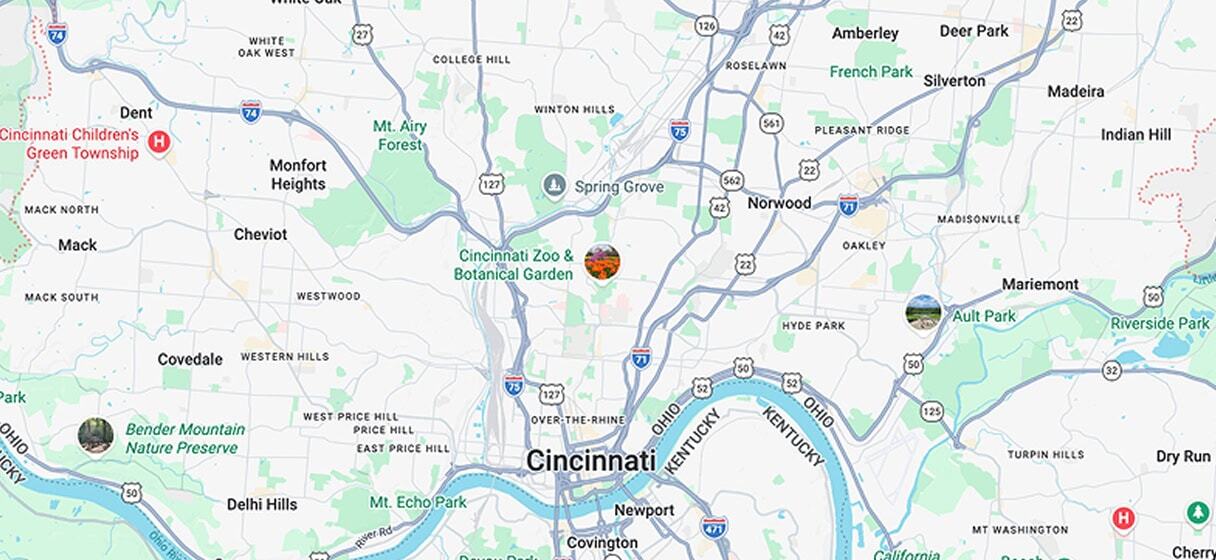
Our Greater Cincinnati service area includes Cincinnati, Milford, Anderson Township, West Chester, Mason, Hyde Park, Blue Ash, Loveland, Norwood, Price Hill, Westwood and surrounding communities.
Northern Kentucky
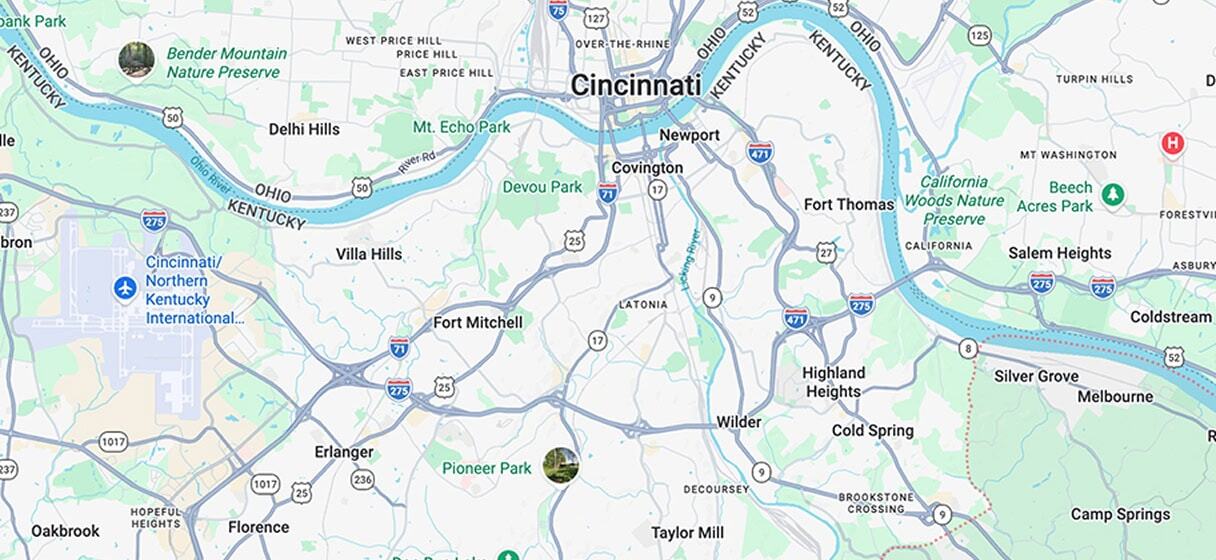
Our Northern Kentucky service area includes Independence, Covington, Fort Thomas, Florence, Erlanger, Newport, and Fort Mitchell and surrounding communities.
Related waterproofing and foundation services
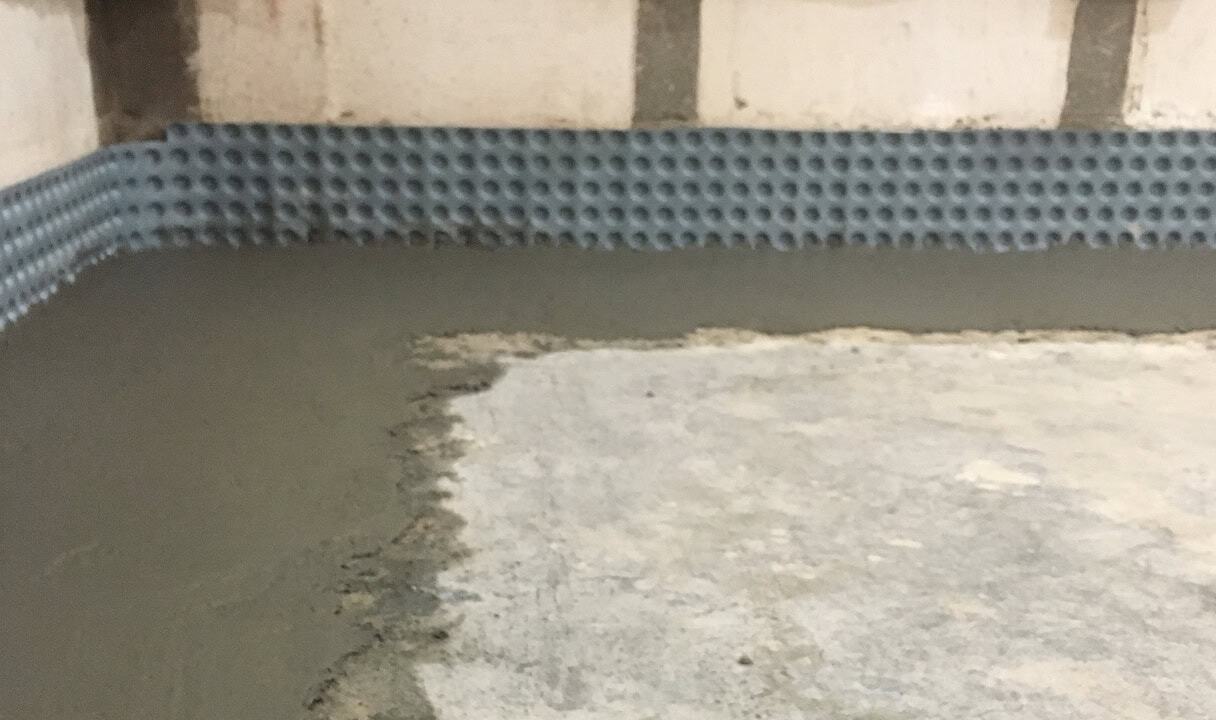
Interior basement waterproofing
For homes where interior drainage and a sump system is the appropriate solution, often the right fit when full perimeter excavation is not practical.
Interior basement waterproofing
All basement waterproofing services
An overview of every waterproofing approach Stealth Foundation offers and how the inspection determines which is right for your home.
All basement waterproofing services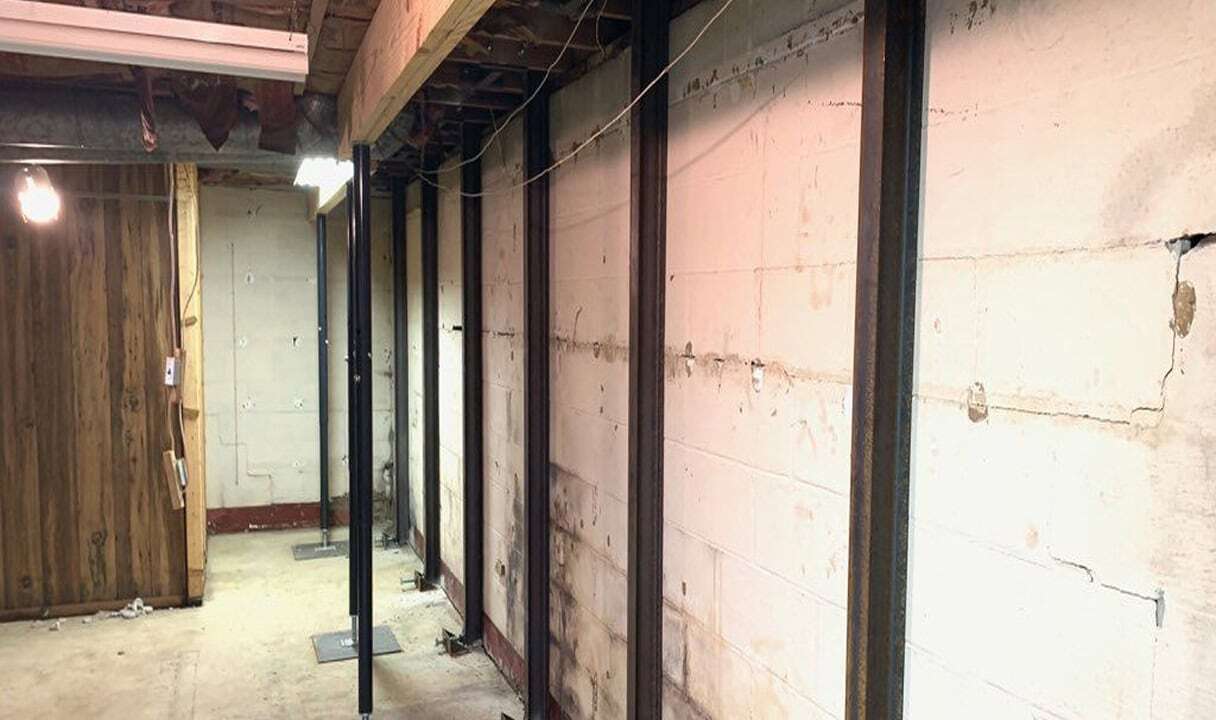
Foundation repair services
For structural issues including settling foundations and bowing walls, which sometimes present alongside water problems.
Foundation repair servicesSchedule your free owner inspection
Exterior waterproofing stops the problem at its source. If your basement has been dealing with water season after season, the free inspection is where you find out exactly what it will take to resolve it permanently. Call Stealth Foundation to schedule with Steve or David Cohen. You will get a straight assessment and a written estimate before any commitment is made.
Call (513) 489-0332 in Ohio or (859) 356-1002 in Northern Kentucky, or schedule online:
Schedule your free owner inspection
We will reach out within one business day to schedule your free owner inspection and written estimate.