
Foundation cracks: what they mean and when to be concerned
Finding a crack in your foundation wall is unsettling. Whether it is serious depends on the type, orientation, and whether it is growing, not on how alarming it looks. This page gives Greater Cincinnati and Northern Kentucky homeowners the context to understand what they are seeing and what to do next.
Call (513) 489-0332 in Ohio or (859) 356-1002 in Northern Kentucky, or schedule online:
Schedule your free owner inspection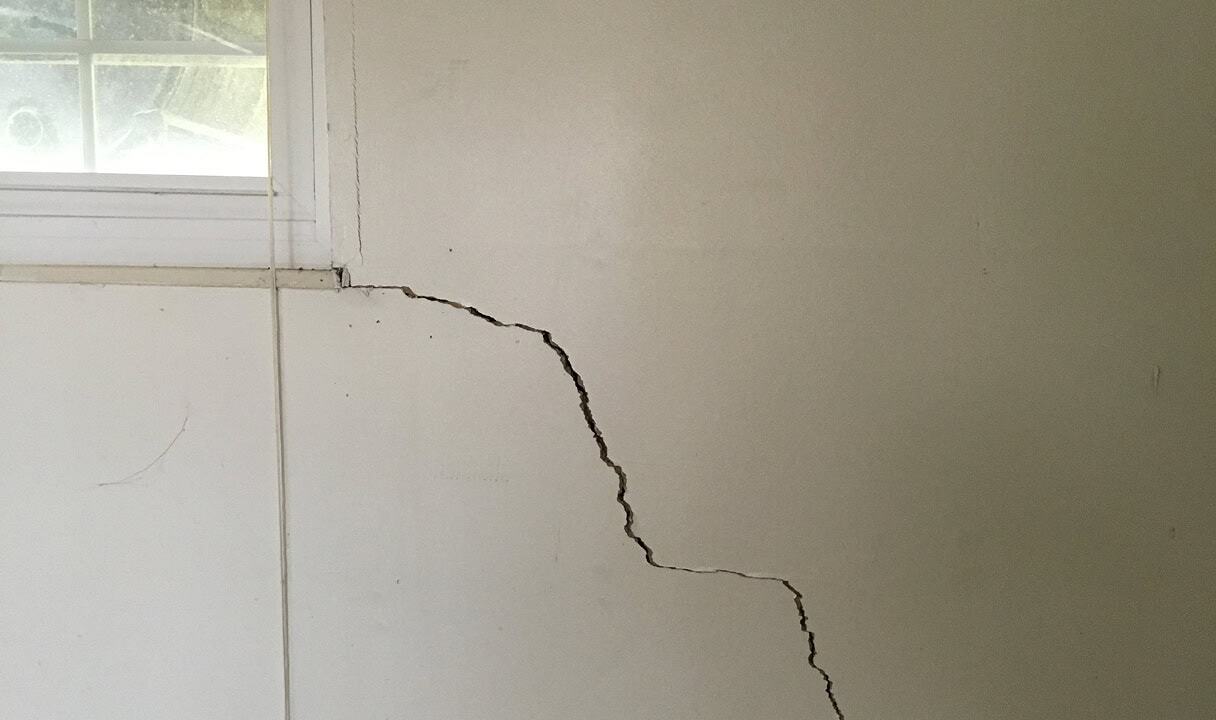
- Free owner inspection, no obligation
- 61 years reading local crack patterns
- We diagnose the cause, not just the crack
What foundation cracks actually mean
A foundation crack is a symptom, not a problem in itself. The crack tells you something has happened or is happening to the foundation, whether soil movement, hydrostatic pressure, settlement, or freeze and thaw stress, but the crack is not the cause. Patching a crack without addressing what caused it is a temporary measure. The crack comes back, often wider, because the underlying condition has not changed.
In Greater Cincinnati and Northern Kentucky, foundation cracks are common. The region's clay-heavy soil expands and contracts with every wet and dry season, freeze and thaw cycling puts mechanical force on basement walls each winter, and a large share of the housing stock consists of concrete block foundations built in the 1940s through 1970s that have been managing these forces for decades. The cracks you find in those walls are evidence of that cumulative stress.
What determines whether a crack needs immediate attention or careful monitoring is its type, orientation, width, growth, and whether it is letting in water. Understanding those factors is what this page covers.
Not all foundation cracks are the same
The type, orientation, and location of a crack are the most reliable indicators of what is happening behind it. Here is how to read what you are seeing.
-
Horizontal cracks
Horizontal cracks running laterally across a basement wall are the most serious crack type a homeowner can find. They indicate that the wall is being pushed inward by the lateral pressure of the surrounding soil, pressure that exceeds what the wall was built to resist. Horizontal cracks at or near the midpoint of the wall are a direct sign of early-stage wall bowing. They do not stay stable on their own. The soil pressure that caused the crack is still present and continues to act on the wall.
If you are seeing a horizontal crack, do not monitor it, have it assessed. This is the one crack type where waiting reduces your repair options. For walls with horizontal cracking and inward movement, I-beam wall stabilization or carbon fiber wall straps are the appropriate professional solutions depending on severity. Learn more on our bowed basement walls page.
-
Stair-step cracks
Stair-step cracks follow the mortar joints diagonally across a concrete block wall. They are common in Greater Cincinnati homes where block foundations built in the 1950s through 1970s have been dealing with decades of clay soil movement. The severity depends on the width of the crack, whether the wall is moving relative to adjacent sections, and whether water is entering. Stair-step cracks can indicate lateral pressure, in which case the repair path leads to wall stabilization, or differential settlement, where one section of the foundation has sunk more than another. The direction and pattern of the cracking helps distinguish between the two, but professional assessment is needed to confirm which is driving the problem.
-
Vertical cracks
Vertical cracks are the most common type in poured concrete foundation walls and are frequently the result of normal concrete curing shrinkage. A hairline vertical crack in a poured concrete wall that has been stable for years and shows no water intrusion is often benign. The cracks worth paying attention to are those wider than a credit card thickness, those that taper, wider at the top than the bottom or vice versa, which indicates differential settlement rather than shrinkage, and any vertical crack that is actively growing or admitting water. Diagonal cracks that start near vertical and angle off at the top or bottom are often misidentified as vertical cracks.
-
Diagonal cracks
Diagonal cracks run at an angle, most commonly at roughly 45 degrees from the corners of door or window openings. This is one of the most recognizable crack patterns in Greater Cincinnati homes and is a reliable indicator of differential settlement, one section of the foundation sinking at a different rate than the adjacent section. As the two sections pull apart or shift relative to each other, the stress concentrates at the corners of openings where the wall is weakest. Diagonal cracks at window and door corners do not indicate a bowing wall, they indicate a sinking one. If this is what you are seeing, the relevant service is helical pier foundation repair, which stabilizes a settling foundation by anchoring it to load-bearing soil below the clay layer causing the movement.
-
Cracks with active water intrusion
Any crack, regardless of type, that is allowing water into the basement is two problems at once: a structural problem that created the crack, and a water intrusion problem that is now entering through it. Both need to be addressed. Treating the water without addressing what caused the crack leaves the structural issue unresolved. Addressing the structural cause without treating the water entry point leaves the basement exposed to moisture and the damage that follows. For cracks that are allowing water in, interior waterproofing or exterior waterproofing is part of the solution alongside whatever structural repair the underlying cause requires.
Warning signs a crack is getting worse
These indicators tell you a crack is active and that waiting is the wrong call.
-
The crack is widening
Mark the ends of the crack with a pencil and the date, and check it monthly. A crack that extends past your marks or becomes visibly wider at any point is actively growing.
-
The crack is extending in length
A crack that was six inches long and is now nine inches has not stabilized.
-
The crack runs horizontally or at a steep diagonal
These orientations rarely stay stable. Horizontal cracks in particular should be treated as urgent regardless of current width.
-
Water is coming through, even intermittently
A crack that leaks only during heavy rain is still a crack that leaks. Intermittent water entry expands the crack with every wet and dry cycle.
-
The wall near the crack shows any inward movement
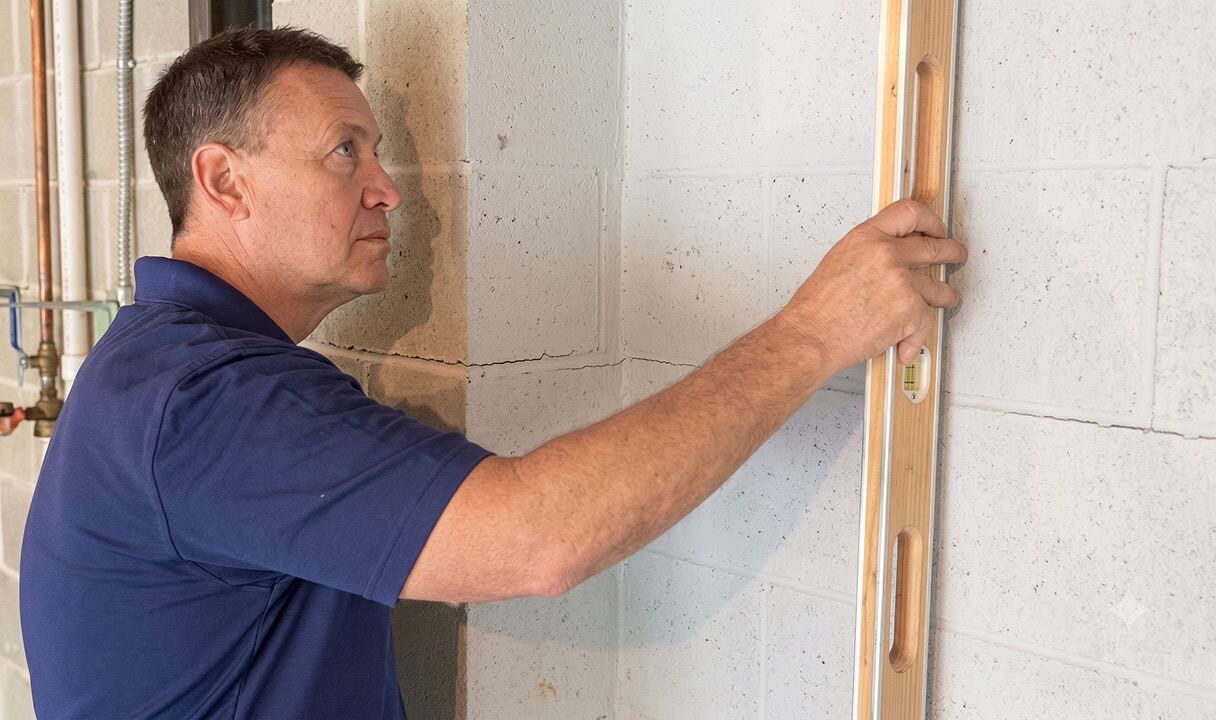
Hold a straightedge against the wall. Any deviation from flat indicates the wall is bowing and the crack is part of a larger structural failure.
-
Doors or windows nearby are sticking or no longer square
Frame distortion near a cracked wall means the structure is moving, not just the surface.
-
Multiple cracks are appearing in the same wall or area
A single hairline crack may be benign. Multiple cracks developing in proximity to each other indicate the wall is under sustained stress.
What causes foundation cracks
Foundation cracks have specific causes. Understanding which one applies to your home is what determines the right response.
-
Hydrostatic pressure
Water-saturated soil presses against the foundation wall until the wall gives way at its weakest point. This is the primary driver of horizontal cracks and wall bowing.
-
Foundation settlement
Soil beneath the foundation shifting, compressing unevenly, or losing its ability to support the structural load causes the foundation to move. Differential settlement, one area settling more than another, produces diagonal cracks and uneven floor levels.
-
Clay-heavy soil
Clay soil expands significantly when wet and contracts when dry. That cycle stresses concrete and block foundation walls repeatedly with every season. Over years and decades, the cumulative movement creates cracks that no amount of patching will prevent from recurring.
-
Freeze and thaw cycles
Northern Kentucky winters push frozen ground against the foundation, then release as it thaws. Each cycle exerts force against the wall and widens any existing cracks slightly. The effect accumulates over many winters.
-
Concrete curing shrinkage
Hairline vertical cracks in poured concrete walls are common during the curing process. These are often benign but require monitoring to confirm they are not growing.
-
Poor drainage and grading
Water that drains toward the foundation rather than away from it concentrates moisture against the wall, accelerating hydrostatic pressure and the soil movement that produces cracks.
-
Age of the foundation
Older block foundations throughout Cincinnati and Northern Kentucky were built to the engineering standards of their era and have had decades of pressure cycles. Block walls are more susceptible to mortar joint failure under lateral pressure than poured concrete walls of equivalent age.
What to do if you have foundation cracks
Patching a foundation crack without addressing what caused it is a temporary fix. The crack comes back, often wider, because the underlying condition has not changed. Stealth Foundation identifies what is driving the crack and recommends the solution that addresses the actual problem, not the surface symptom.
If the crack indicates lateral soil pressure or wall bowing, the relevant solutions are I-beam wall stabilization for moderate to severe cases, or carbon fiber wall straps for walls with early-stage movement. If the crack pattern indicates foundation settlement or sinking, helical pier foundation repair addresses the underlying cause by anchoring the foundation to stable soil below the clay layer. If the crack is allowing water intrusion, interior waterproofing or exterior waterproofing is part of the solution alongside the structural repair. The free inspection identifies which combination applies to your home.
Why Cincinnati and Northern Kentucky foundations crack more than most
The clay soil that underlies the majority of Greater Cincinnati and Northern Kentucky is the defining factor. It expands with every rain and contracts in every dry period. It freezes and pushes outward in every Northern Kentucky winter and thaws back in spring. That continuous movement stresses foundation walls in ways that the more stable, less expansive soils found in drier regions of the country simply do not produce. A foundation wall in Cincinnati has been managing that stress for the entire life of the structure.
Cincinnati's seasonal rainfall, over 40 inches annually, keeps the clay surrounding foundations in a near-continuous state of moisture cycling. The Ohio River valley's moisture-heavy environment means that even between rain events, the soil stays relatively wet by regional standards. The result is sustained hydrostatic pressure on foundation walls throughout most of the year.
The age of the housing stock concentrates the problem. Over 70 percent of homes in the Cincinnati metropolitan area were built before 1969. Block foundations constructed in the 1950s and 1960s were not engineered to manage what 60 or 70 years of Cincinnati soil movement would eventually require of them. Many of the cracked and bowed walls Stealth Foundation inspects are not the result of a single event. They are the accumulated result of doing exactly what they were built to do, for longer than they were designed to do it.
We see this pattern consistently in older neighborhoods throughout Hyde Park, Norwood, Price Hill, and Westwood in Ohio, and in communities across the river including Newport, Fort Thomas, and Covington in Northern Kentucky, areas where block foundations from the 1950s and 1960s have been accumulating decades of clay soil stress and are now showing the crack patterns that come with it.
Frequently asked questions about foundation cracks
Some foundation cracks are common and often benign, particularly hairline vertical cracks in poured concrete walls that result from the normal concrete curing process and have been stable for years without growing or admitting water. These are worth monitoring but do not always require immediate repair. Other cracks are a clear sign of an active structural problem: horizontal cracks indicating lateral soil pressure and wall bowing, diagonal cracks at door and window corners indicating differential settlement, and any crack that is actively widening, extending, or allowing water entry. The crack type, orientation, and whether it is growing are what determine whether you have a cosmetic condition or a structural one. When in doubt, a professional assessment provides a definitive answer rather than ongoing uncertainty.
Horizontal cracks are the most serious type. A horizontal crack running laterally across a basement wall is a direct sign that the wall is bending under lateral soil pressure, the same force that causes walls to bow inward. Unlike vertical shrinkage cracks that may remain stable for years, horizontal cracks indicate active structural stress that does not self-correct. The soil pressure that produced the crack is still present and continues to act on the wall. If a horizontal crack is widening, extending, or accompanied by any visible inward movement of the wall, the situation is urgent. Diagonal cracks are serious as well when they indicate active differential settlement. The safest approach to any horizontal or diagonal crack is a professional assessment rather than a wait-and-see approach. Horizontal and diagonal cracks are among the structural patterns Stealth Foundation assesses most often in Greater Cincinnati and Northern Kentucky homes.
Yes. Any crack in a foundation wall, regardless of what caused it, creates a potential pathway for groundwater to enter the basement, particularly when the surrounding soil is saturated and hydrostatic pressure is pushing moisture inward. Even hairline cracks can admit water under sufficient pressure. Cracks that allow water intrusion combine a structural problem with a moisture problem, and both need to be addressed as part of the solution. Treating only the water without addressing what caused the crack leaves the structural issue unresolved. Treating only the structural cause without addressing the water entry point leaves the basement exposed to the damage that follows chronic moisture intrusion. For cracks that are allowing water in, waterproofing is part of the repair alongside whatever structural solution the underlying cause requires.
Not necessarily, it depends on the type and pattern of the crack. Diagonal cracks at door and window corners, and vertical cracks that taper or are wider at one end than the other, are the crack types most commonly associated with differential foundation settlement, one section of the foundation sinking at a different rate than adjacent sections. Horizontal cracks, by contrast, typically indicate lateral soil pressure rather than sinking, the wall is being pushed inward, not downward. Stair-step cracks in block walls can indicate either depending on the direction of movement. The presence of other symptoms alongside the crack, such as sloping floors, sticking doors, or visible foundation movement, helps narrow down the cause. A professional inspection identifies what is actually happening.
The most reliable monitoring method is simple: mark both ends of the crack with a pencil and write the date next to the marks. Check it monthly. If the crack has extended past either mark, it is growing in length. If the width at any point is visibly larger than before, it is widening. A crack that remains within its original marks and maintains consistent width over several months is more likely to be stable. Beyond visual monitoring, watch for these additional signs: water entering through the crack even intermittently, nearby doors or windows becoming harder to operate, any visible inward bow developing in the wall near the crack, or additional cracks appearing in the same area. Any of these alongside an existing crack indicates the underlying condition is progressing rather than holding.
The primary reason is the clay-heavy soil that underlies most of the region. Cincinnati's clay soil expands significantly when it absorbs moisture and contracts as it dries, a cycle that repeats with every rainfall and dry period, every season, every year. That repeated expansion and contraction stresses foundation walls continuously in a way that the more stable, less reactive soils found in drier regions simply do not. The region receives over 40 inches of annual rainfall, keeping the clay in a near-constant state of moisture cycling. Northern Kentucky's freeze and thaw cycles add mechanical force: frozen ground expands against foundation walls each winter and releases in spring, widening existing cracks incrementally with every cycle. Add to that a housing stock where over 70 percent of homes were built before 1969 on block foundations that have been managing these forces for decades beyond their original design expectations, and the result is one of the higher-than-average foundation crack rates in residential construction in the region.
61 years of combined experience
Why homeowners call Stealth Foundation first
Steve Cohen has 38 years of foundation experience here. David has 23. Between them, 61 years of reading crack patterns in the same block and poured-concrete foundations, the same clay soil, the same seasonal stress cycles. An owner personally conducts every inspection and gives you a straight answer on what is causing the crack and what the right response is. Backed by a BBB A+ rating and verified reviews on Google and Angi, and one promise: we would rather lose a job than sell you a repair your home does not need.
Free foundation crack inspection: find out what you are actually dealing with
The uncertainty about whether a crack is serious is often worse than the repair itself. Steve or David Cohen will assess the crack type, identify the underlying cause, and give you a straight answer on what to do next, with no guesswork and no upsell. If repair is needed, they explain what it involves and what it costs before any commitment. If it is not, they will tell you that too. Every repair is backed by a lifetime transferable warranty.
Call (513) 489-0332 in Ohio or (859) 356-1002 in Northern Kentucky, or schedule online.
Schedule Your Free Inspection
We will reach out within one business day to schedule your free inspection & written estimate.